Net Leadership Capacity: Why Your Strongest Leaders Still Run Out of Room
Andrew Beaulieu explains Net Leadership Capacity, the real leadership capability left once drag and bottlenecks are accounted for, and how organizations can grow it.

Andrew Beaulieu
6 min read
I spent 16 years inside my family's national general contracting firm. I worked every level there is in a mid-sized organization: the 24/7 front line, supervisor, department director, the executive team, and eventually Vice-President and Co-Owner. I watched that company grow from a kitchen-table startup into one of Canada's most respected retail construction businesses, and along the way I saw a pattern repeat itself at every level: strong operators get promoted, they keep carrying too much, and they slowly become the people everything runs through.
That pattern is what led me to focus my coaching practice on what I call Net Leadership Capacity: the leadership capability an organization actually has available once you account for the drag that consumes it. It is not a theoretical idea for me. I lived it, and I now help executives, leadership teams, and the managers coming up behind them address it directly.
What I Mean by Net Leadership Capacity
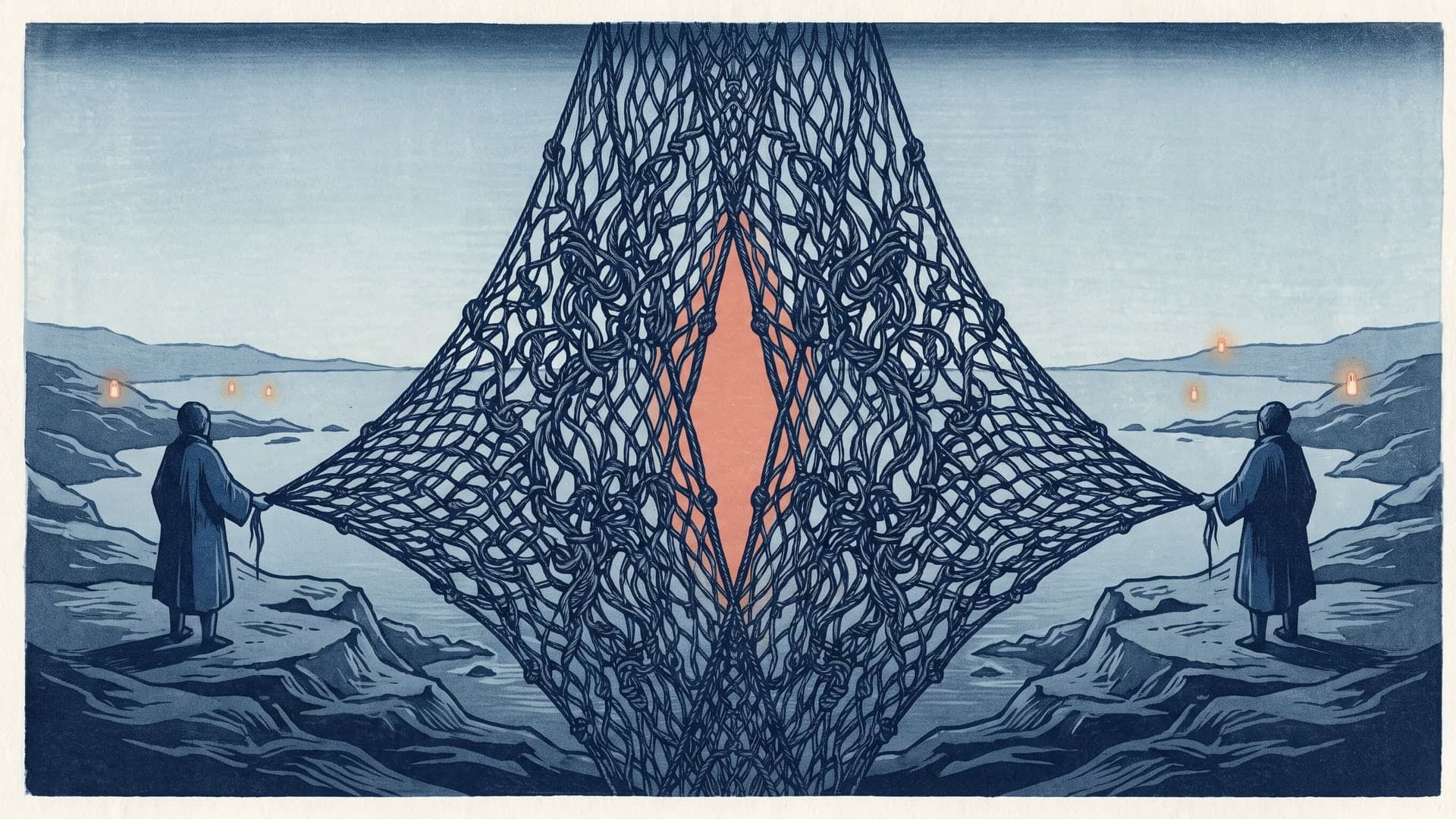
Most organizations measure leadership in terms of titles, headcount, or org charts. But the leadership that is actually available to get things done is smaller than that, because a portion of it is constantly being consumed by friction: unclear accountability, avoided conflict, dependencies on one or two key people, and communication breakdowns that force the same decisions to be made twice.
I think of Net Leadership Capacity as gross leadership capacity minus that drag. You can have a room full of capable people and still have very little net capacity, because so much of their time and energy goes into managing around problems instead of leading through them. This is what I saw happen again and again at our company: a good supervisor would get promoted into a director role, and instead of leading more people, they would end up doing more of the work themselves, because delegating felt slower or riskier than just handling it.
Building Depth at Every Level
One half of my work is building leadership depth at every level of an organization, from emerging leaders to the C-suite. This means working directly on the capabilities that let people lead without becoming bottlenecks themselves: communication, trust, productive conflict, accountability, and emotional intelligence.
These are not abstract soft skills to me. They are the specific muscles that, when underdeveloped, force a leader to carry more than they should. A leader who cannot have a direct conversation about underperformance will absorb that underperformance personally. A team that cannot disagree productively will push unresolved tension up to whoever is willing to make the call, usually the most senior person in the room. Building depth means closing those gaps so that leadership capability actually exists where it is needed, rather than being concentrated in one or two overloaded people.
In this part of my work, I draw on tools like Everything DiSC and Five Behaviors to help individuals and teams understand how they communicate and where trust and conflict tend to break down, and on EQ-i 2.0 and EQ 360 to work on the emotional intelligence that underlies all of it. I also bring in what I have studied through applied neuroscience, because understanding how people actually process stress, change, and feedback matters when you are trying to change behavior, not just awareness.
Reducing the Friction That Consumes Capacity
The other half of the work is reducing the friction, dependencies, and bottlenecks that consume leadership capacity in the first place. This is the part that often gets missed when organizations invest only in training. You can build someone's skills, but if the structure around them still routes every decision through a single person, or still has no clear accountability for a given outcome, that capacity gets consumed as fast as it is built.
This is where my lived experience matters most. I was that person everything ran through, at more than one point in my career. I know what it looks like from the inside: the sense that things will fall apart if you step away, the quiet decision to just handle it yourself rather than coach someone else through it, the way dependencies accumulate until one person's calendar becomes the bottleneck for an entire department. Reducing that drag is not about working harder. It is about identifying where capacity is leaking and addressing the structural and behavioral causes directly.
Turning Insight Into Changed Behavior
I am an ICF-certified coach (Associate Certified Coach), trained through Coach U's Core Essentials program, and I combine that coaching foundation with the assessment tools mentioned above. But the goal of all of it is the same: practical, direct facilitation that turns insight into changed behavior. It is easy for a leader to understand, in a workshop, that they delegate too little or avoid conflict. It is harder to actually change that pattern when they are back in their role under pressure. My focus is on closing that gap.
I work with executives, with leadership teams, and with the managers who are next in line, because Net Leadership Capacity is rarely a problem at just one level. A bottleneck at the top often reflects underdeveloped capacity below it, and vice versa. Addressing it usually means working across levels rather than isolating one group.
Working Together
I coach in both French and English, and all my sessions are available online, which makes it straightforward to work with leaders and teams regardless of location. Through my practice, Bold Moves Coaching & Consulting, I bring together the frameworks I am certified in, including Everything DiSC, Five Behaviors, and EQ-i 2.0 and EQ 360, with 16 years of direct leadership experience inside a growing organization.
If you recognize the pattern I described, strong people being promoted and then quietly carrying too much, or a sense that too much of your organization's capability runs through too few people, I would be glad to talk it through with you. EraCoach offers a free discovery session, and that is a good place to start: we can look at where your leadership capacity is being built and where it is being consumed, and figure out what would actually move the needle. You can book a session with me directly on EraCoach whenever you are ready.

Ready to take action?
Find the coach who matches your goal
Hand-picked certified coaches. Free first discovery session, no commitment.